Wednesday, January 22, 2025

National Pie Day

The more slices you cut, the more you can share; this is known as portion control.


Tuesday, January 21, 2025

National Granola Bar Day

Granola bars consist of granola pressed and baked into a bar shape, producing a convenient snack. The product is most popular in the United States and Canada, Australia and New Zealand, the United Kingdom, parts of southern Europe, Brazil, Israel, South Africa, and Japan. Granola Bars has expanded its market into India and other Southeast Asian countries.

History.

The history of granola bars can be traced back to the 1860s when Dr. James Caleb Jackson invented granula, a baked mixture of graham flour. The granola bar was invented in the 1970s by Stanley Mason, who pressed loose granola into a bar shape. However, there is debate over who actually invented the granola bar.

Granula

  • In 1863, Dr. James Caleb Jackson invented granula, a baked mixture of graham flour.
  • Granula was marketed as a health food alongside cocaine and cigarettes.
  • Granula was revived in the 1960s as an alternative to sugary cereals.

Granola bars
  • Stanley Mason is credited with inventing the granola bar in the 1970s.
  • However, Henry Kimball claims to have invented the granola bar in 1975.
  • Granola bars are made by pressing granola into a bar shape and baking it.
  • Granola bars are a popular snack for outdoor people and sports enthusiasts.
EatingWell
by Breana Lai Killeen, RDN


Yield: 24 bars

Ingredients
3 cups old-fashioned rolled oats
1 cup crispy brown rice cereal
1 cup finely chopped dried apricots (1/4 inch)
½ cup unsalted pepitas toasted
½ cup unsalted sunflower seeds toasted
¼ teaspoon salt
⅔ cup brown rice syrup or light corn syrup
½ cup sunflower seed butter
1 teaspoon ground cinnamon


Directions
  1. Preheat oven to 325 degrees F. Line a 9-by-13-inch baking pan with parchment paper, leaving extra parchment hanging over two sides. Lightly coat the parchment with cooking spray.
  2. In a large bowl, combine oats, rice cereal, apricots, pepitas, sunflower seeds, and salt.
  3. Combine rice syrup (or corn syrup), sunflower butter, and cinnamon in a microwave-safe bowl. Microwave for 30 seconds (or heat in a saucepan over medium heat for 1 minute). Add to the dry ingredients and stir until evenly combined. Transfer to the prepared pan and firmly press into the pan with the back of a spatula.
  4. For chewier bars, bake until barely starting to color around the edge and still soft in the middle, 20 to 25 minutes. For crunchier bars, bake until golden brown around the edge and somewhat firm in the middle, 30 to 35 minutes. (Both will still be soft when warm and firm up as they cool.)
  5. Let cool in the pan for 10 minutes, then using the parchment to help you, lift out of the pan onto a cutting board (it will still be soft). Cut into 24 bars, then let cool completely without separating the bars for about 30 minutes more. Once cool, separate into bars.

Resources
1. Good Housekeeping, Healthy Granola Bars to Fuel Your Day


Thursday, January 16, 2025

Culinary Adventures with Quinoa

Embark on a culinary journey with quinoa. From the high Andes to your kitchen, we're exploring the world's most versatile supergrain. Dive into the latest recipes that transform quinoa into gourmet delights.


"Quinoa is considered the future organic food and holds great potential in efforts to eradicate poverty worldwide and provide global food security and nutrition.” 


The world's attention is on the role quinoa´s biodiversity and nutritional value play in providing food security and nutrition and the eradication of poverty in support of the achievement of the internationally agreed development goals, including the Millennium Development Goals.
 

Quinoa is a grain-like crop grown primarily for its edible seeds. It is a pseudo-cereal rather than a true cereal or grain. Quinoa originated over 3,000 years ago in the Andean region of Ecuador, Bolivia, Colombia, and Peru. 


Quinoa Nutritional Information

Quinoa is high in protein, a good source of dietary fiber and phosphorus and is high in magnesium and iron. Quinoa is also gluten-free.

Preparation. Quinoa has a natural bitter-tasting coating called saponins. Most quinoa sold commercially has been processed to remove this coating. However, the directions may require additional rinsing before cooking.

Quinoa can be added to a wide variety of dishes and substituted in recipes using rice or couscous. Quinoa flour can be used in wheat-free and gluten-free baking. To enhance the flavor, stock can be exchanged for water during cooking. Quinoa can also provide a nutritious breakfast with the addition of honey, nuts, or fruits.


Wednesday, January 15, 2025

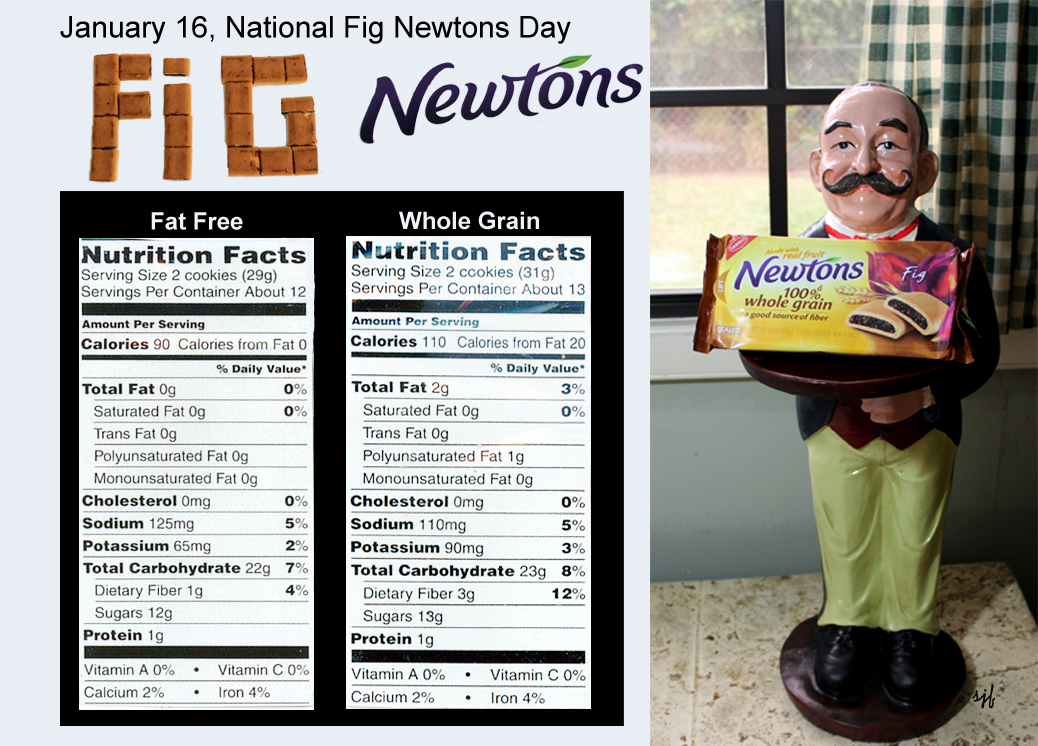
January 16, National Fig Newton Day - Nutrition and How It's Made


Charles M. Roser is known as the man who created the Fig Newton recipe. He would later sell it to the Kennedy Biscuit Works (later known as Nabisco.) 


A Fig Newton is a soft cookie filled with fig jam. As of 2012, in addition to the original fig filling, Nabisco also makes several varieties of the Newton, including strawberry, raspberry, and mixed berry. The Fig Newton also comes in a 100% whole grain and a fat-free variety. There are Fig Newton Minis and a crisp version, called Newtons Fruit Thins. 


How Fig Cookies are Made


Reference

Wikipedia, Newtons (cookie) 
Fig Newton Products 


An educated consumer has the knowledge
to make healthy decisions.


Wednesday, January 8, 2025

January 8, National English Toffee Day

National English Toffee Day

Recognized by the National Confectioners Associations and celebrated by millions across the country, January 8th of each year is National English Toffee Day. A popular variant of the original toffee, in the United States “English toffee,” is a buttery confection topped with almonds. It’s made by caramelizing sugar with butter and can be both hardened or chewy. The Heath bar is a type of candy bar that is made with an English toffee core.


Thursday, January 2, 2025

Mastering the Buffet: Smart Tips for Healthy Choices


A buffet is a system of serving meals in which food is placed in a public area where the diners serve themselves. A buffet can be difficult for a person wanting to control their weight. Planning, moderation, and motivation are key to your success.


Seven Tips to Navigating a Buffet

 1. Never go to a buffet hungry. You may be tempted to overindulge. Have a light snack a few hours before arriving at the event.

 2. Use a salad plate, which holds less food than a dinner plate.

 3. Start off with fresh vegetables and/or salad greens. Serve with low-calorie dressing, vinegar, salsa, mustard, or lemon. Avoid the croutons, bacon bits, cheese, and salads made with mayonnaise.

 4. Next, go for a low-calorie beverage, such as water, unsweetened iced tea, or diet soda. If you are walking around with a beverage in one hand and a plate of vegetables in the other hand, you can easily avoid the appetizers being passed around.

 5. Main meal. Fill half your plate with vegetables. Choose steamed vegetables and keep away from those with heavy sauces. Avoid pastry items, deep-fried, breaded, and foods prepared with mayonnaise, sour cream, and cheese sauces. Instead, choose lean meats, poultry, or fish. If you want to try various items, ask for small samples.

 6. Avoid bread and crackers, especially if prepared with added fat.

 7. If you want a dessert, choose a light alternative. Many buffets now offer low-calorie or sugar-free desserts and fresh fruit.

Eating at a buffet can be challenging, but your success will be rewarded with planning, motivation, and moderation.

Wednesday, January 1, 2025

2025 - Why Sustainability Matters?


The global food system is one of the most significant contributors to greenhouse gas emissions, deforestation, and water consumption. Our choices about what to eat, where to buy it, and how we prepare it profoundly impact the environment. Focusing on sustainability can help reduce our environmental footprint and create a food system that nourishes people and the planet.


1. Reduce Food Waste

Food waste is a major issue, with nearly one-third of all food produced going uneaten. Here’s how you can help:

  • Plan Your Meals: Create a weekly menu to avoid buying more than you need.

  • Get Creative with Leftovers: Turn extra veggies into soups or stir-fries, and use stale bread for croutons or breadcrumbs.

  • Store Smartly: Keep fruits and vegetables fresh longer by storing them properly. For example, leafy greens last longer in a damp paper towel.

  • Compost: If food goes bad, compost it instead of throwing it in the trash to reduce landfill waste.


2. Eat Seasonally

Seasonal eating connects us to the earth's natural rhythms and ensures that our food is fresher, tastier, and more nutritious.

  • Know What’s in Season: Familiarize yourself with seasonal produce in your area. Winter squashes, root vegetables, and citrus fruits are examples of winter delights.

  • Visit Farmers Markets: They’re a treasure trove of seasonal goods and a great way to discover what’s fresh.

  • Grow Your Own: Even a small herb garden on a windowsill can provide fresh, seasonal flavors for your meals.


3. Support Local Farmers

Local farmers are the backbone of a sustainable food system. By choosing locally grown foods, you’re reducing the carbon footprint associated with transportation and supporting your community.

  • Join a CSA (Community Supported Agriculture): Get a weekly box of fresh produce directly from a local farm.

  • Shop at Farmers Markets: Build relationships with local growers and learn about their sustainable practices.

  • Look for Local Labels: In grocery stores, choose products labeled as locally sourced.


A Call to Action: Building a Better Future

Sustainable eating isn’t about perfection; it’s about progress. By reducing food waste, eating seasonally, and supporting local farmers, we can make small changes that lead to big impacts. Imagine a world where every meal we eat helps restore the planet, strengthens communities, and improves our well-being.

This year, let’s commit to sustainable eating goals that align with our values and aspirations. Together, we can build a food system that nourishes us today and preserves the planet for future generations.


Dietitian Blog List