Monday, February 10, 2025

Pulses: Bringing diversity to agrifood systems

Celebrating World Pulses Day 2025:
Pulses - Bringing Diversity to Agrifood Systems


Every February 10th, the world comes together to celebrate World Pulses Day, a tribute to the humble yet mighty pulses that nourish people and the planet alike. Established by the United Nations in 2018, this special day has been dedicated to raising awareness about the significant role pulses play in promoting sustainable agriculture, food security, and healthy diets worldwide.


What Are Pulses?
Pulses, also known as legumes, are the edible seeds of leguminous plants cultivated for food. This diverse group includes dried beans, lentils, chickpeas, and peas, staples in cuisines worldwide. Whether it's creamy hummus from the Mediterranean, savory Indian dal, or baked navy beans in a traditional English breakfast, pulses are cherished for their versatility, taste, and nutritional value.

Why Are Pulses Important?

  1. Nutritional Powerhouses:
    Pulses are packed with essential nutrients, making them a vital source of protein, especially in regions where meat and dairy may be scarce or unaffordable. They are low in fat, rich in fiber, and loaded with vitamins and minerals like iron, potassium, and folate. Their high soluble fiber content helps manage cholesterol and blood sugar levels, reducing the risk of heart disease, diabetes, and obesity. Health organizations worldwide recommend pulses as part of a balanced diet to combat non-communicable diseases.

  2. Ensuring Food Security:
    For farmers, pulses are more than just crops—they are lifelines. They provide a dual benefit: farmers can sell them for income while consuming them for household nutrition. This dual role strengthens food security, fosters economic stability, and empowers communities, particularly in vulnerable regions.

  3. Environmental Champions:
    Pulses do more than nourish us; they also nourish the Earth. Thanks to their nitrogen-fixing properties, pulses naturally enrich the soil, reducing the need for synthetic fertilizers. This lowers greenhouse gas emissions and promotes healthier, more biodiverse farmland. Pulses thrive in diverse cropping systems, supporting intercropping and cover cropping practices that improve soil health and resilience against pests and diseases.

World Pulses Day 2025 Theme: "Pulses: Bringing Diversity to Agrifood Systems"
This year's theme highlights the multifaceted contributions of pulses to enhancing diversity—from the farm fields to our plates. Pulses promote above- and below-ground biodiversity, offering over 100 varieties for farmers to integrate into crop rotations. Thus, they boost resilience against climate change and agricultural challenges. Our diets provide a rich, affordable source of protein that can be transformed into countless delicious, nutritious dishes.

Get Involved: Discover, Share, Celebrate
Join the global celebration of World Pulses Day by learning more about these remarkable crops. Visit the FAO website for stories, reports, and communication materials. Share what you learn on social media to spread the message of sustainability, health, and food security.

In Conclusion
Pulses may be small, but their impact is enormous. They sustain our bodies, support our farmers, and protect our planet. This World Pulses Day, let's celebrate their role in creating a healthier, more sustainable, and diverse agrifood system—one pulse at a time.

Tuesday, February 4, 2025

World Nutella Day - Nutrition Profile

Nutella is a brand of sweetened hazelnut cocoa spread manufactured by the Italian company Ferrero first introduced in 1964. Nutella is a form of a chocolate spread. Therefore, the production process for this food item is very similar to a generic production of chocolate spread.

The label states that Nutella does not need to be refrigerated. This is because of the large quantity of sugar in the product acts as a preservative to prevent the growth of microorganisms. More specifically, the sugar acts as a preservative by binding the water in the product, which prevents the microorganisms from growing. In fact, refrigeration causes Nutella to harden because it contains fats from the hazelnuts. Nutella is made from sugar, modified palm oil, hazelnuts, cocoa, skimmed milk powder, whey powder, lecithin, and vanillin. 

Nutella Profile

In the United States, Ferrero was sued in a class action for false advertising leading to consumer inferences that Nutella has nutritional and health benefits (from advertising claims that Nutella was "part of a nutritious breakfast"). In April 2012, Ferrero agreed to pay a $3 million settlement (up to $4 per jar for up to five jars in returns by customers). The settlement also required Ferrero to make changes to Nutella's labeling and marketing, including television commercials and their website

Resource:
1. Wikipedia, Nutella 
2. Nutella, World Nutella Day  

World Cancer Day

WHAT IS WORLD CANCER DAY?
World Cancer Day takes place every year on February 4 and is the singular initiative under which the entire world can unite together in the fight against the global cancer epidemic. 

World Cancer Day is an initiative of the Union for International Cancer Control (UICC), through which the aim is to help save millions of preventable deaths each year by raising awareness and education about cancer and pressing governments and individuals across the world to take action against the disease. 


World Cancer Day is a chance to improve general knowledge around cancer and dismissing misconceptions about the disease. From a global level, the message focuses on the following four myths.


Myth 1: Cancer is just a health issue.
Truth: Cancer is not just a health issue. It has wide-reaching social, economic, development, and human rights implications.

Myth 2: Cancer is a disease of the wealthy, elderly and developed countries.

Truth: Cancer is a global epidemic It affects all ages and socioeconomic groups, with developing countries bearing a disproportionate burden.

Myth 3: Cancer is a death sentence.

Truth: Many cancers that were once considered a death sentence can now be cured and for many more people, their cancer can now be treated effectively.

Myth 4: Cancer is my fate.

Truth: With the right strategies, a third of the most common cancers can be prevented.

World Cancer Day

A global event taking place every year on 4 February, World Cancer Day unites the world’s population in the fight against cancer. Taking place under the tagline ‘We Can. I Can.’, World Cancer Day 2016-2018 will explore how everyone – as a collective or as individuals – can do their part to reduce the global burden of cancer. Read more about World Cancer Day and how to get involved on www.worldcancerday.org.


A truly global event, World Cancer Day unites the world’s population in the fight against cancer.

Taking place under the tagline ‘We Can. I Can.’, World Cancer Day 2016-2018 will explore how everyone – as a collective or as individuals – can do their part to reduce the global burden of cancer.

Read more about World Cancer Day and how to get involved here.


Did you know that each year, over 12.7 million people receive a cancer diagnosis and 8.2 million people die from the disease? If no action is taken, the worldwide cancer burden is expected to reach 26 million new diagnoses and 17 million deaths by the year 2030, with the most rapid increases occurring in low- and middle-income countries. 

It’s not all bad news as 30-40% of cancers can be prevented, and one-third of cancers can be cured through early diagnosis and treatment. 
UICC aims to help people understand how to take steps to prevent cancer and live a healthier and longer life.

A Healthy Diet and Physical Activity
A healthy diet and regular adequate physical activity are of major importance to preventing cancer and maintaining good health throughout life.
*Be as lean as possible without becoming underweight.
*Be physically active for at least 30 minutes every day.
*Avoid sugary drinks. Limit consumption of energy-dense foods. (particularly processed foods high in added sugar, or low in fiber, or high in fat). 
*Eat more of a variety of vegetables, fruits, whole grains, and beans.
*Limit consumption of red meats (such as beef, pork and lamb) and avoid processed meats. 
*If consumed at all, limit alcoholic drinks to 2 for men and 1 for women a day. 
*Limit consumption of salty foods and foods processed with salt (sodium). 
*Don’t use supplements to protect against cancer.

Quit Tobacco 

Tobacco kills more than 5 million people a year, an average of one person every six seconds. You can prevent cancer when you stop smoking, chewing, and sniffing tobacco. Try to avoid exposure to passive smoke to further reduce your risk. 

Sun Exposure 

Excessive exposure to UV radiation (either from the sun or from artificial sources such as sun beds) is associated with accelerated skin aging and different types of skin cancer. Stop using sun beds and avoid excessive sun exposure. Remember to use sunscreens and protective clothing as an effective cancer prevention method.

For additional preventative measures, visit 
World Cancer Day – Union for International Cancer Control (UICC).

Tuesday, January 28, 2025

A Stack of Pancakes is Not One Serving
National Blueberry Pancake Day


Oatmeal Buttermilk Blueberry Pancakes,
by Martha Rose Shulman, #NYTCooking. 


Blueberry Pancakes with Fresh Blueberries


Serves One
Ingredients
2 Blueberry Pancakes frozen
1/3 cup Fresh Blueberries

Portion Control


Nutritional Analysis Services

Ensure accurate and cost-effective nutritional analysis and food nutrition facts labels for your recipes and menus utilizing an extensive research database. A great service for the Media, Cookbook Publishers, Writers, Chefs, Recipe Websites, and Blogs. Your readers will enjoy and benefit from the Nutrition information.

For more information, visit Dietitians-Online Nutritional Analysis Services.

contact:
Sandra Frank, Ed.D, RDN, FAND

Tuesday, January 21, 2025

National Granola Bar Day

Granola bars consist of granola pressed and baked into a bar shape, producing a convenient snack. The product is most popular in the United States and Canada, Australia and New Zealand, the United Kingdom, parts of southern Europe, Brazil, Israel, South Africa, and Japan. Granola Bars has expanded its market into India and other Southeast Asian countries.

History.

The history of granola bars can be traced back to the 1860s when Dr. James Caleb Jackson invented granula, a baked mixture of graham flour. The granola bar was invented in the 1970s by Stanley Mason, who pressed loose granola into a bar shape. However, there is debate over who actually invented the granola bar.

Granula

  • In 1863, Dr. James Caleb Jackson invented granula, a baked mixture of graham flour.
  • Granula was marketed as a health food alongside cocaine and cigarettes.
  • Granula was revived in the 1960s as an alternative to sugary cereals.

Granola bars
  • Stanley Mason is credited with inventing the granola bar in the 1970s.
  • However, Henry Kimball claims to have invented the granola bar in 1975.
  • Granola bars are made by pressing granola into a bar shape and baking it.
  • Granola bars are a popular snack for outdoor people and sports enthusiasts.
EatingWell
by Breana Lai Killeen, RDN


Yield: 24 bars

Ingredients
3 cups old-fashioned rolled oats
1 cup crispy brown rice cereal
1 cup finely chopped dried apricots (1/4 inch)
½ cup unsalted pepitas toasted
½ cup unsalted sunflower seeds toasted
¼ teaspoon salt
⅔ cup brown rice syrup or light corn syrup
½ cup sunflower seed butter
1 teaspoon ground cinnamon


Directions
  1. Preheat oven to 325 degrees F. Line a 9-by-13-inch baking pan with parchment paper, leaving extra parchment hanging over two sides. Lightly coat the parchment with cooking spray.
  2. In a large bowl, combine oats, rice cereal, apricots, pepitas, sunflower seeds, and salt.
  3. Combine rice syrup (or corn syrup), sunflower butter, and cinnamon in a microwave-safe bowl. Microwave for 30 seconds (or heat in a saucepan over medium heat for 1 minute). Add to the dry ingredients and stir until evenly combined. Transfer to the prepared pan and firmly press into the pan with the back of a spatula.
  4. For chewier bars, bake until barely starting to color around the edge and still soft in the middle, 20 to 25 minutes. For crunchier bars, bake until golden brown around the edge and somewhat firm in the middle, 30 to 35 minutes. (Both will still be soft when warm and firm up as they cool.)
  5. Let cool in the pan for 10 minutes, then using the parchment to help you, lift out of the pan onto a cutting board (it will still be soft). Cut into 24 bars, then let cool completely without separating the bars for about 30 minutes more. Once cool, separate into bars.

Resources
1. Good Housekeeping, Healthy Granola Bars to Fuel Your Day


Thursday, January 16, 2025

Culinary Adventures with Quinoa

Embark on a culinary journey with quinoa. From the high Andes to your kitchen, we're exploring the world's most versatile supergrain. Dive into the latest recipes that transform quinoa into gourmet delights.


"Quinoa is considered the future organic food and holds great potential in efforts to eradicate poverty worldwide and provide global food security and nutrition.” 


The world's attention is on the role quinoa´s biodiversity and nutritional value play in providing food security and nutrition and the eradication of poverty in support of the achievement of the internationally agreed development goals, including the Millennium Development Goals.
 

Quinoa is a grain-like crop grown primarily for its edible seeds. It is a pseudo-cereal rather than a true cereal or grain. Quinoa originated over 3,000 years ago in the Andean region of Ecuador, Bolivia, Colombia, and Peru. 


Quinoa Nutritional Information

Quinoa is high in protein, a good source of dietary fiber and phosphorus and is high in magnesium and iron. Quinoa is also gluten-free.

Preparation. Quinoa has a natural bitter-tasting coating called saponins. Most quinoa sold commercially has been processed to remove this coating. However, the directions may require additional rinsing before cooking.

Quinoa can be added to a wide variety of dishes and substituted in recipes using rice or couscous. Quinoa flour can be used in wheat-free and gluten-free baking. To enhance the flavor, stock can be exchanged for water during cooking. Quinoa can also provide a nutritious breakfast with the addition of honey, nuts, or fruits.


Wednesday, January 15, 2025

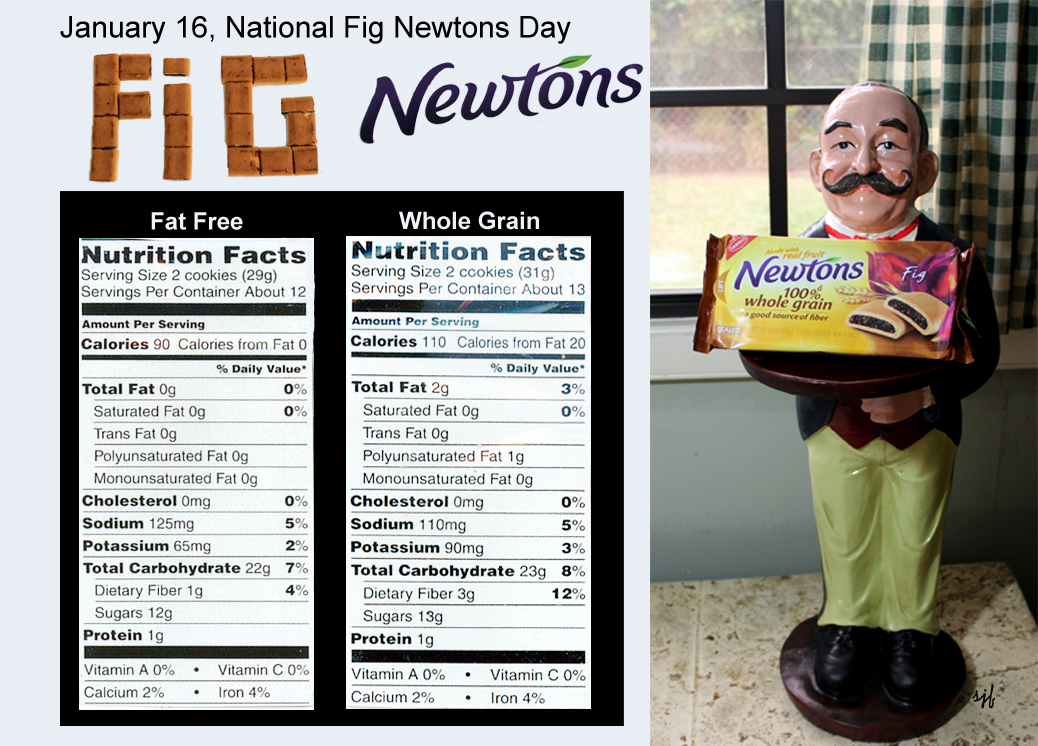
January 16, National Fig Newton Day - Nutrition and How It's Made


Charles M. Roser is known as the man who created the Fig Newton recipe. He would later sell it to the Kennedy Biscuit Works (later known as Nabisco.) 


A Fig Newton is a soft cookie filled with fig jam. As of 2012, in addition to the original fig filling, Nabisco also makes several varieties of the Newton, including strawberry, raspberry, and mixed berry. The Fig Newton also comes in a 100% whole grain and a fat-free variety. There are Fig Newton Minis and a crisp version, called Newtons Fruit Thins. 


How Fig Cookies are Made


Reference

Wikipedia, Newtons (cookie) 
Fig Newton Products 


An educated consumer has the knowledge
to make healthy decisions.


Wednesday, January 8, 2025

January 8, National English Toffee Day

National English Toffee Day

Recognized by the National Confectioners Associations and celebrated by millions across the country, January 8th of each year is National English Toffee Day. A popular variant of the original toffee, in the United States “English toffee,” is a buttery confection topped with almonds. It’s made by caramelizing sugar with butter and can be both hardened or chewy. The Heath bar is a type of candy bar that is made with an English toffee core.


Thursday, January 2, 2025

Mastering the Buffet: Smart Tips for Healthy Choices


A buffet is a system of serving meals in which food is placed in a public area where the diners serve themselves. A buffet can be difficult for a person wanting to control their weight. Planning, moderation, and motivation are key to your success.


Seven Tips to Navigating a Buffet

 1. Never go to a buffet hungry. You may be tempted to overindulge. Have a light snack a few hours before arriving at the event.

 2. Use a salad plate, which holds less food than a dinner plate.

 3. Start off with fresh vegetables and/or salad greens. Serve with low-calorie dressing, vinegar, salsa, mustard, or lemon. Avoid the croutons, bacon bits, cheese, and salads made with mayonnaise.

 4. Next, go for a low-calorie beverage, such as water, unsweetened iced tea, or diet soda. If you are walking around with a beverage in one hand and a plate of vegetables in the other hand, you can easily avoid the appetizers being passed around.

 5. Main meal. Fill half your plate with vegetables. Choose steamed vegetables and keep away from those with heavy sauces. Avoid pastry items, deep-fried, breaded, and foods prepared with mayonnaise, sour cream, and cheese sauces. Instead, choose lean meats, poultry, or fish. If you want to try various items, ask for small samples.

 6. Avoid bread and crackers, especially if prepared with added fat.

 7. If you want a dessert, choose a light alternative. Many buffets now offer low-calorie or sugar-free desserts and fresh fruit.

Eating at a buffet can be challenging, but your success will be rewarded with planning, motivation, and moderation.

Wednesday, January 1, 2025

2025 - Why Sustainability Matters?


The global food system is one of the most significant contributors to greenhouse gas emissions, deforestation, and water consumption. Our choices about what to eat, where to buy it, and how we prepare it profoundly impact the environment. Focusing on sustainability can help reduce our environmental footprint and create a food system that nourishes people and the planet.


1. Reduce Food Waste

Food waste is a major issue, with nearly one-third of all food produced going uneaten. Here’s how you can help:

  • Plan Your Meals: Create a weekly menu to avoid buying more than you need.

  • Get Creative with Leftovers: Turn extra veggies into soups or stir-fries, and use stale bread for croutons or breadcrumbs.

  • Store Smartly: Keep fruits and vegetables fresh longer by storing them properly. For example, leafy greens last longer in a damp paper towel.

  • Compost: If food goes bad, compost it instead of throwing it in the trash to reduce landfill waste.


2. Eat Seasonally

Seasonal eating connects us to the earth's natural rhythms and ensures that our food is fresher, tastier, and more nutritious.

  • Know What’s in Season: Familiarize yourself with seasonal produce in your area. Winter squashes, root vegetables, and citrus fruits are examples of winter delights.

  • Visit Farmers Markets: They’re a treasure trove of seasonal goods and a great way to discover what’s fresh.

  • Grow Your Own: Even a small herb garden on a windowsill can provide fresh, seasonal flavors for your meals.


3. Support Local Farmers

Local farmers are the backbone of a sustainable food system. By choosing locally grown foods, you’re reducing the carbon footprint associated with transportation and supporting your community.

  • Join a CSA (Community Supported Agriculture): Get a weekly box of fresh produce directly from a local farm.

  • Shop at Farmers Markets: Build relationships with local growers and learn about their sustainable practices.

  • Look for Local Labels: In grocery stores, choose products labeled as locally sourced.


A Call to Action: Building a Better Future

Sustainable eating isn’t about perfection; it’s about progress. By reducing food waste, eating seasonally, and supporting local farmers, we can make small changes that lead to big impacts. Imagine a world where every meal we eat helps restore the planet, strengthens communities, and improves our well-being.

This year, let’s commit to sustainable eating goals that align with our values and aspirations. Together, we can build a food system that nourishes us today and preserves the planet for future generations.


Tuesday, December 31, 2024

Southern New Year’s Tradition: Black-Eyed Peas & Collard Greens

 Black-Eyed Peas and Collard Greens

A Southern tradition for the New Year is enjoying Black-Eyed Peas and Collard Greens. The black-eyed peas bring good luck, and the collard greens ensure financial security in the New Year.


Black-Eyed Peas and Collard Greens

Yields: 8 – 10 servings
Serving size. 3/4 cup

Ingredients

2 tablespoons Olive Oil
1 Garlic clove, minced
8 cups Collard greens, chopped
1 cup Red bell peppers, diced
1/4 teaspoon Cayenne pepper
2 cans (15-1/2 ounces each) Black-eyed peas, rinsed and drained
1/4 cup Lemon juice
2 tablespoons grated Parmesan cheese

Directions

  1. In a Dutch oven, heat oil over medium heat.
  2. Add garlic; cook and stir 1 minute.
  3. Add collard greens, red peppers, and cayenne; cook and stir for 6-8 minutes or until greens are tender.
  4. Add black-eyed peas and lemon juice; heat through. Sprinkle servings with cheese.

Nutrition Facts. Yields: 8 – 10 servings. Analysis per 3/4 cup serving: Calories (kcal) 134; Protein (g) 7; Carbohydrates (g) 18; Total Dietary Fiber (g) 5; Total Sugars (g) 0; Added Sugar (g) 0; Fat (g) 4; Saturated Fat (g) 1; Cholesterol (mg) 1; Calcium (mg) 110; Potassium (mg) 304; Sodium (mg) 346


Meal Planning

Breakfast
1 Egg to Order
1/2 Bagel
1/2 cup Strawberries
1 cup Skim or Soy Milk
Coffee, Tea, Water

Lunch
3/4 cup Vegetable Soup
Curry Tuna
3 oz Tuna (Water Packed)
Dash Curry Powder
1 Tbsp Mayonnaise, reduced-calorie
Spinach Leaves, Sliced Tomato
1 sl Whole Grain Bread
Water/Unsweetened Beverage

Dinner
2 oz Roast Beef
3/4 cup Collard Greens & Black-Eyed Peas
1/3 cup Seasoned Wild Rice
Water/Unsweetened Beverage

Snacks
Plan Snacks throughout the day. Add an endless salad to any meal or snack.
The Fat-free Vinaigrettes are free to consume.
4 oz Wine
1 Apple, sliced
3/4 oz Cheese

Daily Nutrition Facts: Calories (kcal) 1242; Protein (g) 80; Carbohydrates (g) 136; Total Dietary Fiber (g) 18; Total Sugars (g) 49; Added Sugar (g) 5; Fat (g) 34; Saturated Fat (g) 11; Cholesterol (mg) 311; Calcium (mg) 849; Potassium (mg) 2328; Sodium (mg) 2100


Monday, December 30, 2024

The Endless Salad


 Enjoy these low Glycemic Index vegetables anytime and in unlimited amounts, as long as they are fresh and raw. If an amount is stated, do not exceed the daily portion listed. You can eat these foods using a fat-free vinaigrette dressing (recipes provided) or purchase a fat-free vinaigrette at your local market. Read the label. The RDNs at the FNC center encourage the consumption of varied vegetables not only for vitamins and minerals but also to help control blood sugar and calorie intake.

Alfalfa seeds
Arugula
Broccoli
Cauliflower
Celery, diced
Cucumbers
Endive
Green Beans
Lettuce (Bibb, Boston, or Romaine preferred)
Pepper, Bell (any color), 1 medium
Radishes
Scallions (green onions), diced
Spinach
Zucchini, 1 medium


Additional Ingredients. You can choose ONE of the following low Glycemic Index foods per day to add to the Endless Salad.
Apple, 1 small
Grapefruit, ½ medium
Orange, 1 small

Macadamia Nuts, 8 nuts
Peanuts, 8 nuts
Walnuts, 8 nuts

Add an endless salad to any meal or snack. The Fat-free Vinaigrettes are free to consume.


All About Vinegar: Fat-Free Vinaigrette Recipes


Vinegar has been around for more than 10,000 years. The Babylonians used it as a preservative and as a condiment, and it was they who began flavoring it with herbs. Romans used it as a beverage. Hippocrates proclaimed its medicinal qualities, and it was probably one of our earliest remedies. The Bible references show how it was used for its soothing and healing properties. As recently as World War I, vinegar was used to treat wounds. Today, it is being researched to lower the glycemic index of foods and decrease appetite.

Fat-free vinaigrette Recipes are easy to prepare and can be used as a marinade, salad dressing, or sauce.


Balsamic Vinaigrette Dressing
Yield: 1 cup; Serving Size: Unlimited
3/4 cup water
1/4 cup balsamic vinegar
2 teaspoons capers
2 teaspoons Dijon mustard
1½ teaspoons dried basil
1 tablespoon fresh parsley, chopped
Combine the ingredients. Adjust vinegar to taste. Store in a covered container in the refrigerator.

Oriental Vinaigrette
Yield: 1 cup; Serving Size: Unlimited
1 clove garlic, cut in several pieces
1 cup rice vinegar (unseasoned)
1 tsp low sodium soy sauce
1 slice fresh ginger, cut in several pieces
Combine all ingredients, stirring well to combine. Let stand for 45 minutes. Strain dressing. Discard ginger and garlic (or use in food preparation at a later time).

Chili-Cilantro Vinaigrette Dressing
Yield: ¾ cup; Serving Size: Unlimited
1 small green chili, diced
¼ cup chopped fresh cilantro
¼ cup water
¼ cup fresh lime juice
1 clove garlic
pinch, artificial sweetener
freshly ground pepper to taste
Place all of the ingredients in a food processor or blender. Blend until smooth.

Citrus Herb Vinaigrette Dressing
Yield: 1½ cup; Serving Size: Unlimited
½ medium-sized red bell pepper
2 medium tomatoes, diced
½ cup loosely packed fresh basil leaves, chopped
2 cloves garlic, minced
½ cup fresh orange juice
½ cup loosely packed fresh parsley
¼ cup raspberry vinegar
1 Tablespoon dry mustard
2 teaspoons fresh thyme leaves
2 teaspoons fresh tarragon
2 teaspoons fresh oregano
Combine all ingredients in a blender or food processor and blend until pureed. Makes approximately 1½ cups.

Indian Vinaigrette Dressing
Yield: ¼ cup; Serving Size: Unlimited
¼ cup orange juice
¼ teaspoon ground coriander
¼ teaspoon chopped cilantro
½ teaspoon prepared hot mustard
Put all ingredients in a small bowl, and stir. Let sit for about 10 minutes.

Orange and Lemon Vinaigrette
Yield: 1 cup; Serving Size: Unlimited
½ cup wine vinegar
4 Tablespoons lemon juice
4 Tablespoons orange juice
grated rind of 1 lemon
½ teaspoon French mustard
pinch garlic
ground black pepper to taste
Place all ingredients in a bowl, and mix thoroughly. Keep in the fridge and use within 2 days.

Orange Thai Vinaigrette Dressing
Yield: ½ cup; Serving Size: Unlimited
5 Tablespoon orange juice
1 teaspoon minced ginger
1 teaspoon minced garlic
1 Tablespoon low-sodium soy sauce
¼ cup rice vinegar
pinch of cayenne
Whisk together all ingredients with a fork.

Parsley-Tomato Vinaigrette Dressing
Yield: ¾ cup; Serving Size: Unlimited
¼ cup tomato juice (low sodium)
Pinch of cayenne pepper
¼ cup red wine vinegar
½ teaspoon oregano, fresh
1 Tablespoon onion, minced
½ teaspoon black pepper
¼ cup parsley, chopped fresh
½ cup tomatoes, chopped, fresh
1 garlic clove, minced
Place all ingredients in a blender or food processor. Process until smooth.

Red Pepper Vinaigrette
Yield: ½ cup; Serving Size: Unlimited
¼ cup apple juice
¼ cup cider vinegar
2 tablespoons white onion
1 cloves garlic, pressed
Pinches of rosemary and thyme
½ teaspoon dried whole oregano
½ teaspoon dry mustard powder
½ teaspoon paprika
½ of a roasted red bell pepper
Mix in a blender. Blend thoroughly and chill overnight.

Tomato Vinaigrette
Yield: ½ cup; Serving Size: Unlimited
½ cup tomato, chopped
2 Tablespoons white wine vinegar
½ teaspoon dried basil
½ teaspoon dried thyme
½ teaspoon Dijon mustard
Mix in a blender. Blend thoroughly and chill overnight. Lasts about 2 days. Serve on salads.

Types of Vinegar:

WINE VINEGAR, GRAPE VINEGAR. The product is made by the alcoholic and subsequent acetous fermentation of the juice of grapes.

MALT VINEGAR. The product is made by the alcoholic and subsequent acetous fermentation, without distillation, of an infusion of barley malt or cereals whose starch has been converted by malt.

SUGAR VINEGAR. The product is made by the alcoholic and subsequent acetous fermentation of sugar syrup, molasses, or refiner’s syrup.

GLUCOSE VINEGAR. The product is made by the alcoholic and subsequent acetous fermentation of a solution of glucose. It is dextrorotatory.

SPIRIT VINEGAR, DISTILLED VINEGAR, GRAIN VINEGAR. The product is made by the acetous fermentation of dilute distilled alcohol.

VINEGAR IS MADE FROM A MIXTURE OF SPIRIT VINEGAR AND CIDER VINEGAR. The product should be labeled as a blend of the products with the product names in order of predominance. This labeling applies to a similar product made by acetous fermentation of a mixture of alcohol and cider stock.

VINEGAR IS MADE FROM DRIED APPLES, APPLE CORES, OR APPLE PEELS. Vinegar is made from dried apples, apple cores, or apple peels.

Plan Snacks throughout the day. Add an endless salad to any meal or snack. The Fat-free Vinaigrettes are free to consume.


Dietitian Blog List